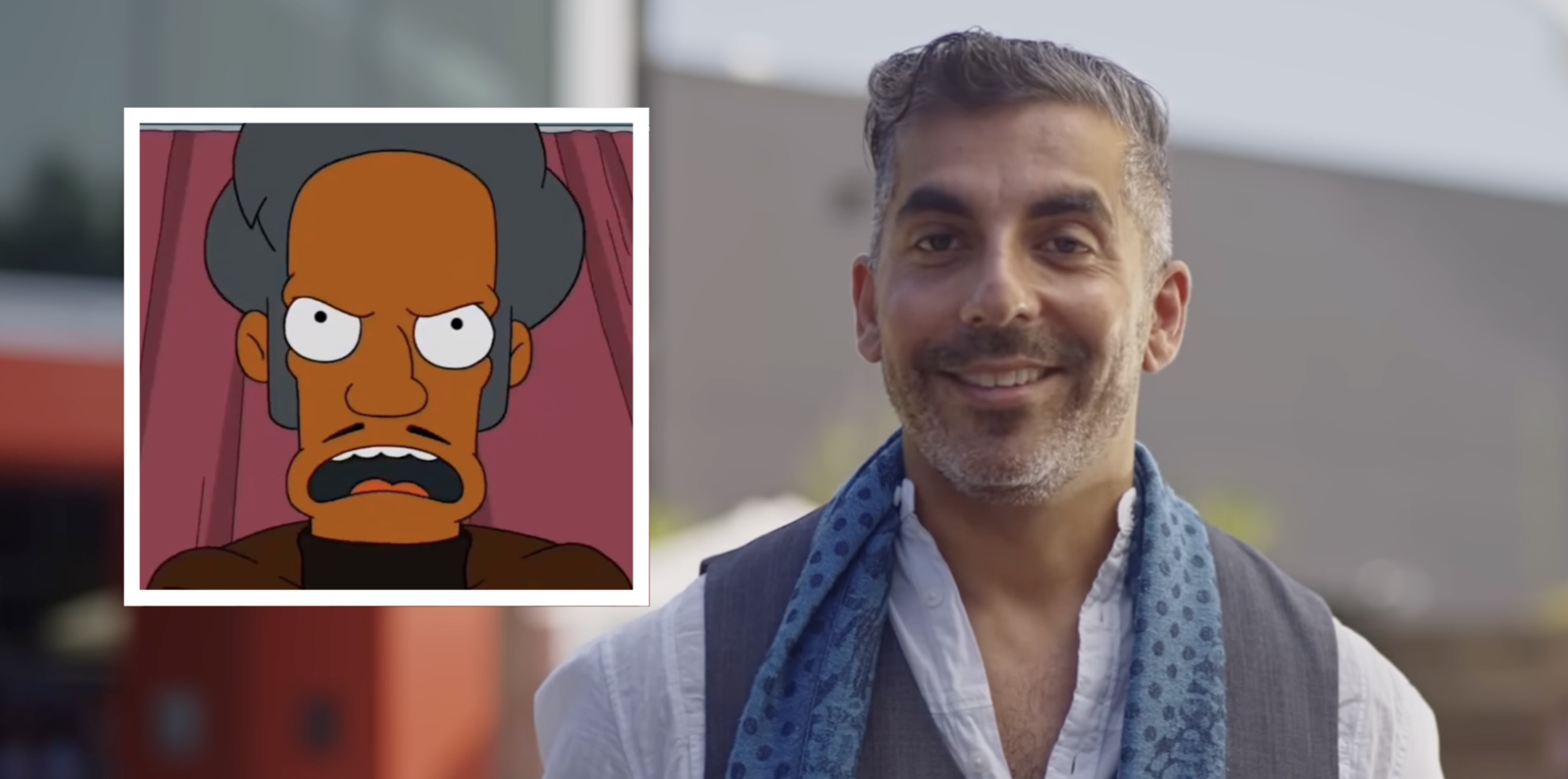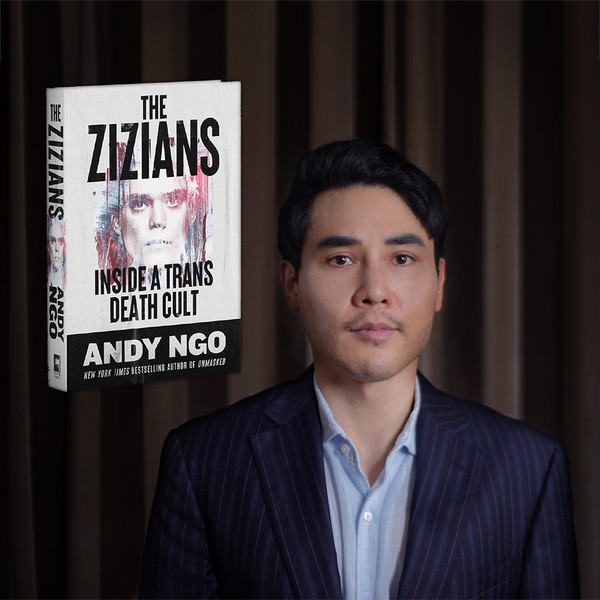

The Justice Centre for Constitutional Freedoms has announced that Jessica Yaniv is pursuing yet another immigrant-woman owned salon at the B.C Human Rights Tribunals. Despite this, Yaniv is now being penalized by the BCHRT for refusing to pay outstanding fines.
Yaniv approached Top Touch, a Vancouver- area salon, on August 1 2019—just five days after the hearings had concluded on the initial complaints at the BCHRT. Yaniv demanded a Brazilian wax, a genital wax that would require the handling of Yaniv’s scrotum, and leg wax.
Top Touch aestheticians declined and eventually told Yaniv they would call the police if Yaniv continued to call.
The JCCF is representing Top Touch in addition to She Point, another Sikh-owned beauty salon which Yaniv has also launched a BCHRT complaint against after similarly declining Yaniv a Brazilian wax. The complaint against She Point was announced one month ago, shocking many people as it appeared to be a repeat of the cases Yaniv had just lost on the basis of racial animus and vexatious litigation.
Yaniv maintained on social media that She Point was requested only to perform a leg wax, but verification from JCCF confirmed that She Point aestheticians were first asked to perform the scrotal wax.
Clarified with the @JCCFCanada — Yaniv asked for a leg wax AFTER the being denied the Brazilian and told the grounds.
— Anna Slatz | အန်နာ (@YesThatAnna) January 7, 2020
Yaniv is lying through the teeth again. pic.twitter.com/8VSVbp99dS
In total, Yaniv has pursued 16 primarily South-Asian immigrant-owned salons at the B.C Human Rights Tribunal.
In today’s news release, the Justice Centre for Constitutional Freedoms has noted that these latest human rights complaints by Yaniv will be deferred by the BCHRT if Yaniv does not pay the outstanding $6,000 owed from Yaniv’s 2019 tribunal suits. Yaniv was ordered by the Tribunal to pay $2,000 to each of 3 salon owners Yaniv pursued after the Tribunal found Yaniv had acted “inappropriately” and that Yaniv’s conduct had been “extortionary” and “calculated.”
The deferral means the complaints Yaniv has brought to the BCHRT will not be heard or considered for six months, this time period intended to give Yaniv time to pay the women owed. If the fees are not paid, the cases currently on hold may be dismissed.
Jay Cameron, a lawyer with the JCCF working on these cases commented: “We contend this second wave of complaints is equally as abusive and unmeritorious as Yaniv’s other complaints, and await further developments.”
Want to help us grow? Here's what you can do!

WATCH: Arrests made as antifa, trans protestors disrupt free speech event in Seattle
On February 1, feminist group Women’s Liberation Front held a panel discussion at the Seattle Public Library on the impact of transgender activism on women’s sex-based rights. Featuring Sabina Malik, Kara Dansky, and Twitter-banned Meghan Murphy, the sold-out talk was met with resounding support, but trans rights activists and antifa made their resentment and hostility clear.
Masked protestors wielding signs and chanting misogynistic slurs were monitored closely by Seattle police, who were out in full force to detail the crowd outside of the library.
As the night continued, the protests grew louder. Protestors began to use drums, whistles, and amplifiers in an attempt to disrupt the peaceful women’s rights-related talk occurring inside. He seems nice. pic.twitter.com/b7PxLB9sjL
Several of the protestors managed to breach the security barriers and were shouted down by the crowd while police took action and removed them from the premises.
Another of the arrests during the SPL #Newmisogyny event. pic.twitter.com/YZIA8FVI6t— Amy Eileen Hamm (@preta_6) February 2, 2020
The Seattle Public Library event represents a disturbing trend in peaceful talks being shouted down by social justice mobs. In November of 2019, #GIDYVR had to relocate to the Pan Pacific after its Simon Fraser University sponsor, Mark Collard, withdrew access to the venue due to the overwhelming threat of violence.
In January 2020, Andy Ngo’s lecture at the University of British Columbia was cancelled citing similar concerns about campus safety.
All photos property of Amy Eileen Hamm (@preta_6) and used with consent.
Want to help us grow? Here's what you can do!

Elizabeth Warren wants transgender child to pick education secretary
HBO late-night host Bill Maher shredded Elizabeth Warren’s latest woke antics as “crazy stuff,” asking if she’s running for president of the United States or “running for president of Berkeley.” The liberal comedian’s well-deserved rebuke of Warren shows that her identity politics obsession is reaching such absurd levels that even her own side is rolling their eyes.
The 2020 Democratic presidential candidate faces this widespread mockery after stating on Jan. 30 that she would delegate her selection of education secretary to a transgender child. Yes, seriously: This sounds like a parody headline in the Onion or the Babylon Bee, but it’s actually real.
Warren promised during a campaign event to select as education secretary “someone who’s taught in a public school,” and assured voters that her selection would be subject to the approval of a “young trans person.” She appears to have been referencing a 9-year-old transgender-identifying child, Jacob, who asked a question during one of the Democratic presidential debates.
She continued: “I’m going to have a Secretary of Education that this young trans person interviews on my behalf, and only if this person believes that our Secretary or Secretary of Education nominee is absolutely committed to creating a welcoming environment, a safe environment, and a full educational curriculum for everyone will that person actually be advanced to be Secretary of Education.”
This is almost beyond parody.
Yes, Warren is slipping in the polls, and it’s not exactly shocking to see her grasping at straws as her bid for the White House looks increasingly bleak. But to literally promise that you will outsource your cabinet selection to children is a shockingly unserious position for the supposed “policy wonk” candidate to take.
Why not have trans children select the secretary of defence? The vice president? Better yet, Warren could just take a straw poll of her local kindergarten class and see who they think should fill her cabinet.
The transgender aspect of this is almost irrelevant. Transgender or not, trusting the management of the federal government to a literal child is absurd.
There’s also something just oddly inconsistent about Warren’s point. Do all transgender children think the same? Surely not. It’s likely that certain trans children would approve of a nominee while others would not approve of the same nominee. In what universe is the arbitrary chance that a particular token trans child approves of a random nominee at all worthy of being a decisive factor?
This is fantasy land nonsense, straight out of the gender studies department at Berkeley.
I still can’t believe an actual, leading presidential candidate for a major U.S. political party made this statement. Heck, we might as well just make the trans child president at this point. Even a child is likely to be much more sensible than Warren.
Brad Polumbo is Deputy Opinion Contributors Editor for the Washington Examiner. You can follow him on Twitter @Brad_Polumbo.
Want to help us grow? Here's what you can do!

Convicted sex predator of young children to be released for being trans
Joseph Matthew Smith, who now goes by the name Josie Smith, is a convicted baby rapist and pedophile who has molested as many as 15 children ranging in ages one to 15. Common sense would tell you that an individual as depraved as Josie would be behind bars forever, but the Iowa Attorney General’s Office disagrees. Josie is set to be released from prison because she now “identifies” as a woman and is taking estrogen medication.
Many are horrified by this story and want answers. According to the Cherokee Civil Commitment Unit for Sex Offenders, the recommendation for Smith’s release is due specifically to the fact that Smith is undergoing hormone replacement therapy and therefore no longer has a “male sex drive”. A director for the facility, it is much harder for the state to prove someone is at risk to reoffend once the individual significantly lowers their testosterone levels.
Smith began their prison sentence in 2014. In Nov. 2017, they came out as a transgender woman, began using female pronouns, and started undergoing hormone replacement therapy.
The spokesperson for the attorney general Lynn Hicks told the Storm Lake Times that “an offender’s hormone levels are an important part of substantiating an offender’s likelihood of recidivism.”
“We don’t believe we have evidence sufficient to prove Josie Smith has a significant chance of reoffending,” Hicks proclaimed.
Hicks said that Smith will be subject to “strict sex-offender reporting” requirements and insisted that the general public should not “overreact” to the release of Josie. She then went on to state, “She’ll be subject to supervision for the rest of her life.”
The precedent that this case sets for the future is worrisome. If one person can identify their way out of consequences for the crimes they committed, what is to stop others from following suit? Furthermore, it should be widely understood that perpetrators of sexual crimes don’t always attack their victims for sexual gratification. It is just as much about control and asserting power over someone weaker than them–this completely nullifies the attorney general’s point about Josie’s “male sex drive”.
Also, the manner in which estrogen affects the sex drive of male-to-female transsexuals is not complete chemical castration, as the attorney general apparently believes it is. While it does indeed lower the libido, it does not completely remove it. It also returns fully if Josie were to ever cease or pause medication. It’s unclear if the state will monitor Josie’s hormones after the release.
Regardless, the idea that Josie should be released from prison based on what the court sees as the low likelihood that Josie will offend again is nonsense. There still needs to be time served for the 15 victims whose lives were forever changed by this monster’s actions. It is baffling to think that Josie would be allowed to skip out on prison time simply because of a transgender status. One estrogen pill a day is excusing the justice that the victims and their families deserve.
As of now, the date of Josie’s release is not clear.
Want to help us grow? Here's what you can do!

‘Provocative’ gender dysphoria expert gives vital speech at McGill
On Thurs Jan 23, University of Toronto professor of psychiatry Dr. Ken Zucker, a leading international expert on gender dysphoria, and editor-in-chief of Archives of Sexual Behaviour, spoke at McGill University. Dr. Zucker’s presentation was titled, “Children and Adolescents with Gender Dysphoria: Some contemporary research and clinical issues.”
Inviting Dr. Zucker to speak in an open forum was an act of courage, as he is Canada’s most controversial researcher/clinician in this domain. In a recent column for the National Post on the run-up to this event, I summarized the story of his persecution by hostile trans activists and linked to a more detailed account.
Dr. Zucker’s critics accuse him of practicing “conversion therapy,” by which they mean his objective is to prevent his patients from transitioning. But what Dr. Zucker actually practices, as he explained to me in an interview, is “Developmentally Informed Psychotherapy.”
In layman’s terms, Dr. Zucker looks at his patients holistically in order to determine if the distress that brought them to his attention is a function of gender dysphoria alone, or gender dysphoria as one of a number of factors, including issues arising out of family dynamics, autism spectrum disorder, depression, anxiety and so on. If in the course of treatment, it becomes clear that finding comfort in his or her natal sex is a reasonable goal for the client, Dr. Zucker offers guidance to that objective. If it becomes clear that only transition will answer to the patient’s need, Dr. Zucker endorses transition, and puberty blockers or hormone therapy as required.
But any form of traditional psychotherapy is considered to be a form of subversion by many trans activists because trans activists reject assumptions that gender dysphoria is a disorder or even a “distress” requiring psychotherapy. Their watchword is “affirmation,” the assumption that if a young child – even as young as three – says he or she wants to change genders, they know what they want and their wish must be respected, often without any further exploration at all before social transition is encouraged.
“Watchful waiting”—withholding immediate affirmation, giving the child’s parents and professional observers time to assess the depth and putative permanence of the expressed desire—is also anathema to a small, but vocal group of trans advocates. To these activists, Dr. Zucker’s perspective is superannuated, offensive and, in their discourse, “harmful.” It was a given that the announcement of the event would spark protest. It was just a matter of what kind, and how obstructive it would be.
The presentation was sponsored by the “Culture, Mind and Brain Program,” a subdivision of McGill’s Division of Social and Transcultural Psychiatry. Assistant professor of psychiatry Samuel Veissière, co-director of the program, who headed up the organizing team for the talk, was fully cognizant of the tension that would surround it, and did a great deal of spadework in reaching out to stakeholding organizations like Queer McGill, expressing sympathy for their concerns and soliciting their attendance.
Some individuals from these groups did attend, although McGill Equity’s Subcommittee on Queer People preferred to hold their own alternative “positive space for trans and non-binary students, staff and faculty (and their allies) who would feel the need to gather and be together in solidarity…[with] snacks, tea and hot chocolate [provided].”
The important thing is that protest was carried out on Facebook pages calling for boycotts of the event, and letters to the administration asking for cancellation (the administration did not waver in the face of this pressure, to their credit), rather than in attempts to physically inhibit, or even shout down the speaker. In fact, not a single active protester showed up at the lecture site in McGill’s Neurological Institute-Hospital (“the Neuro”), and those who came to the lecture itself with a view to challenging Dr. Zucker, listened respectfully, calmly voicing their disagreements with him in the extended Q&A. That in itself is a triumph in these days of “cancel culture” and a tribute to the organizers and to the maturity of the opposition.
A trans-advocacy mantra one continually hears from those protesting the scholarship of Dr. Zucker and others with his perspective is “nothing about us without us.” That is, trans advocates believe they have the right to participate in any public forum on this subject, because science, they rightly observe, is never entirely neutral, and has often been exploited to uphold societal values, notably in the case of homosexuality, which was only depathologized in medical texts mere decades ago.
They are understandably defensive about research, however sound by objective standards, that might be driven by unconscious bias. Whether that suspicion confers a right to insert representation of their own belief system into all public forums in which opposing views are featured is debatable, to say the least. Practically speaking, if that were the rule, scholars like Dr. Zucker would find their time slots so reduced in length as to trivialize their contribution.
Prof Veissière addressed these concerns with exquisite delicacy and eloquence in his introductory remarks to the full lecture room:
Two key issues in particular strike me as exceptionally important. These two issues are in fact questions. They are questions about neutrality and advocacy, on the one hand, and questions about who can speak for whom on the other… In recognition of past and ongoing medical injustice, I want to propose—speaking from my own perspective here—that the relevant point here is not so much that science cannot be neutral, but that it shouldn’t be.
I speak as an anthropologist and cognitive scientist now, as one who is committed to documenting and honouring a set of core values found in absolutely all cultures. These are the values of charity for those in need, hospitality to those different from us, and commitment to the greater human good. Charity and hospitality also teach us to engage in forgiveness and reconciliation. These core values are often translated and lived in traditions of loving-kindness..
Given its long and ongoing history of marginalization, the trans community can often feel excluded and harmed when conversations about them are taking place without them. We all need to listen to this point and learn from it. Similarly, when some parents who are doing their best to help their gender-nonconforming child live a good life tell us they feel excluded from the current conversation when they want to ask more questions, we need to listen and learn. When individuals for whom transition didn’t work tell us they feel excluded from this conversation, we need to listen and learn.
This is what I want to invite you all to do together today. Listen to and learn from each other’s diverse perspectives and experiences in the spirit of loving kindness and democracy.
Tucked in between the statistics, graphs and pie charts of his PowerPoint, Dr. Zucker made allusion to certain “trigger” points. One is the widely acknowledged fact in the non-trans academic community that most effeminate little boys are not gender dysphoric, but gay. These desistors— children whose gender preference may be ambiguous in childhood, but who after puberty revert to comfort in their natal sex, albeit with same-sex preference, present a difficulty for trans advocates. Were they really trans to begin with, if they can revert? This begs the question of what it means to “know” you are “in the wrong body.” In his somewhat puckish manner, Dr. Zucker slipped in some zingers. Noting the disappearance of the “butch lesbian,” Dr. Zucker asked, “Is trans the new tomboy?”
Another hot button in the clash between unconditional affirmers and watchful waiters is the looming shadow of “suicidality.” “Better a trans kid than a dead kid” is a frequently adduced trans credo. Here Dr. Zucker pointed out problems in methodology with the various alarmist suicidality studies. Some predictors of suicidal ideation, he said, were general behavioural problems and, for example, being female in a single-parent family. Adolescents with gender dysphoria that are referred for treatment do indeed demonstrate higher rates of suicidality, but then so do non-trans kids who are referred for other problems. This is an area that needs more research and more control groups, he said.
Rapid Onset Gender Dysphoria—ROGD—is the most divisive and controversial issue in the debate. The cynosure for trans advocates’ anger is a study on ROGD published by researcher Lisa Littman of Brown University on PLOS ONE, the most downloaded study in that journal’s history. It suggests that for many teenage girls (the great majority of ROGD subjects), identifying as trans is a “maladaptive coping mechanism” for girls suffering from other problems, and its startling escalation expressive of a social contagion. Dr. Zucker alluded to the reception of the report by trans advocates as an attack on trans people and “a debunked right-wing conspiracy theory.”
(Full disclosure: I have met with many of the parents cited in the Littman study as part of my work. The accusations against them by hostile trans activists are absurd and defamatory. Those I met are loving parents, tortured by their children’s sudden conversion and withdrawal from them—a strategy promoted on the websites they are obsessed with—and desperate to help them achieve mental and psychological stability. They are neither politicized nor biased against homosexuality or gender dysphoria. The Littman study, in my opinion, is responsibly conceived and executed, persuasive and grounded entirely in good-faith efforts to understand an unprecedented social phenomenon.)
The ROGD debate hinges on treatment. In The Netherlands, Dr. Zucker noted, the Dutch do longer assessments before prescribing blockers or HRT, so treatment may only begin two years after referral. In Canada, you can be prescribed blockers after 15 minutes. There’s food for thought there, no matter what side of the debate you are on.
The Q & A was intense but restrained.
Standouts: a young woman, a detransitioner who had stopped taking hormones and wished to live in accordance with her biology, spoke quietly and sadly about her experience of being encouraged into hormonal transitioning by therapists in spite of a history of depression. She had experienced suicidal ideation as a result of her experience. She believes therapists should insist that anyone with depression be treated primarily for that, only secondarily for gender dysphoria.
Literally and figuratively on the other side of the room, a young transman countered with “I was mentally ill and also trans,” declaring that if it were not for rapid affirmation and treatment, he would have committed suicide. Dr. Zucker responded that in his opinion an individual is not getting “good quality care” if she or he is not treated holistically. He noted, however, that some advocates are arguing that mental health people should no longer be involved in the transition process altogether.
That’s worrisome for those of us opposed to radical trans solipsism, because what is “argued” for today may well be public policy tomorrow. After all, “conversion therapy” is illegal in some provinces already, and a Senate Bill (S-260), presently in first reading, seeks to have it included in the Criminal Code.
Many of the attendees were academics in this domain. Prof Veissières was gratified in particular that a leading trans positive researcher in the field from the Université de Montréal had not only attended, but engaged in a collegial discussion with Dr. Zucker during the Q & A, and afterward. This was precisely the form of “reconciliation” he was seeking to encourage.
One student spoke to the freedom of speech issue, arguing that even if people feel harmed, higher education institutions exist to accomplish goals that override the putative right not to be offended. Universities must deliberate all sides of issues, so that later “we aren’t flailing making policy decisions.” The Neuro, he pointed out, is not only a learning institution but a clinic that aims to relieve actual harms and sufferings. There’s a cost/benefit analysis to be done.
As you see, the mixed audience raised a gamut of difficult questions, and I think all present felt their minds were stretched in a positive way by the need to juggle their own settled opinions with opinions they do not normally hear in their academic and social silos. Was the young transman “harmed” by hearing the point of the view of the detransitioning woman? Were the many trans allies present harmed by the opinion that freedom of speech in universities should take precedence over the wish not to be offended? I saw no evidence of that, and I hope all those present would agree that the space was “safe” for everyone.
If you have read this far, I congratulate you on your stamina and thank you for your patience. I have gone on at such length, because although McGill’s administration stood fast on this invitation, I have seen enough of the correspondence around the event between and amongst trans stakeholders in the McGill community to fear that wheels have been set in motion with a view to formal internal roadblocks that would preclude further invitations to speakers whose views do not align with those of gender-fluidity theorists. I therefore wanted to be on record in a detailed way as a witness to the success of the program.
Two attendees referred to Dr. Zucker’s presence as “provocative.” The logic in applying the word “provocative” is circular. Basically, it means, “We, trans advocates and allies, do not approve of Dr. Zucker’s findings or conclusions or clinical principles because some of them conflict with our preferred understanding of the phenomenon of gender dysphoria. We cannot prove that our findings are more scientifically viable than his, but since his are offensive to us, they must be “provocative” in general.
This is the Humpty-Dumpty school of rhetoric. It is professionally feckless, not to mention an unworthy smear of Prof Veissière, whose compassion for gender-dysphoric people is palpable, and whose invitation to an ultra-accredited colleague to speak on the issue was issued in good faith.
Moreover, there is debate within the trans community itself overdiagnosis and treatment, and many non-ideological trans people find such “provocative” opinions as Dr. Zucker’s both reasonable and admirable. Where children’s interests are at stake, the precautionary principle should never be considered offensive. “Provocative” should be reserved for hatemongers, or speakers of dubious accreditation in spouting demonstrably fallacious theories (an accusation often directed at gender theorists themselves, but without attempts to de-platform them on that account).
Beyond suggesting that Dr. Zucker’s ideas are both wrong and dangerous, there is a further dimension to the word “provocative” that I think most people outside the trans movement find disturbing.
The trans movement has worked very hard to normalize the concept of gender fluidity. Transgenderism is often wrongly conflated with homosexuality. But living happily gay does not involve bodily changes, lifelong medication or surgery to produce psychological comfort with one’s biology or gender.
As a consequence of accepting that gender transitioning is normal, however, one must accept easy and immediate affirmation, and everything that goes with it—puberty blockers, cross-sex hormones, surgeries, infertility—as normal too. If society, in general, accepts this premise, then parents who wish to slow down this allegedly normal process may legitimately be labelled obstructive. Their stubbornness in resisting rapid affirmation may be labelled “provocative” as well.
As a result, prudent and protective parents—what I would call “normal” parents – are often positioned as enemies of the child—and their status as enemies is often communicated to the child. The isolated child finds a new family amongst the many trans allies only too happy to welcome him or her into the fold. The distress of parents caught up in this Kafkaesque nightmare, as I learned firsthand from interviewing parents of ROGD teenagers, cannot be overstated.
Observers in the public are extremely uneasy about this situation. They know very well that true gender dysphoria is quite rare. But they also know that in the present cultural climate, it is increasingly difficult to find a therapist or educator who does not recommend instant affirmation. They feel they will be vilified for stating the obvious in what they wish for their children.
They know, and so do we all that: it is preferable to be comfortable in your own body than uncomfortable; it is preferable to expend one’s mental energies on the world around one than to be constantly mentally consumed by one’s gender identity; it is preferable to live a life free of daily hormone ingestion and not at risk for their negative side effects than to be condemned to a lifetime of them; it is preferable to know that having children or not will be an informed adult choice than a choice made for you when you are incompetent to understand its ramifications; it is preferable to live life in a whole body than in a mutilated one; it is preferable to have uncomplicated sexual relations as an adult than complicated.
All parents want to see their children following the path of least resistance to health and happiness. Thus, all these statements being so evidently true, they ought to be considered banal. But today—because it is “provocative” – they must not voice these banalities. They are afraid, reasonably so, that they will be labelled transphobic.
Sadly, we now see parents who pretend for the sake of “wokeness” that it is a matter of indifference to them whether their child is comfortable in his or her natal sex or prefers to transition. We even see parents who establish an artificial environment of gender neutrality to create a level playing field between the two outcomes. They win fawning plaudits from a vocal band of activists, but the silent majority of people are appalled by such social engineering, the use of one’s own children as gender-theory lab rats
This is why many of those who can afford to turn to Dr. Zucker for guidance when their children show signs of gender confusion, which may be transient or early evidence of homosexuality, or which may be signs of genuine and permanent self-identification as the opposite sex. They know he will allow them to express their preference and their fears without judgment, but if it turns out to be necessary, will help them to accept what they fear with empathy.
I walked down the mountain from The Neuro to Sherbrooke St with Dr. Zucker after the event, and we held an informal post mortem of it. That it was not cancelled was in his eyes a “good outcome.”
We both mused on the strangeness of trans activists’ demands that they be part of every presentation regarding gender dysphoria. Their slogan, “nothing about us without us” suggests that researchers are talking about “them” as individuals rather than the phenomenon of gender dysphoria. To my mind, there’s a certain narcissism in such an absurd implication. Anorexics do not demand to be given equal time with anorexia researchers in the public forum. Neither do people with Autism Spectrum Disorder, even though in the past science was not particularly kind to them either.
Dr. Zucker treats children from toddlerhood on. Exploration of all contributing factors is extensive and as leisurely as necessary. He says occasionally a therapeutic breakthrough can turn on a dime. In one case, as an example, the underlying issue for the girl – a natal female expressing the wish to transition to male – was a conflict with her abusive father. Her epiphany came one day when Dr. Zucker asked her, “If you are afraid of your father, why do you want to be the same gender as he is?” This brought her up short, he said, and she was silent. The next day, she told him she had decided she wanted to remain a girl.
I asked him how many of his patients resolved their distress without a need for transitioning, and ended up identifying with their natal sex. As if he knew that question was coming—he surely must have known—Dr. Zucker briskly replied, “eighty-eight percent.” It is probably just as well that the question and the “provocative” answer did not arise in the Q&A.


Social Media